
Family
Agent 04 of nine · Communication · The family who never had to call.
CareBravo®’s Communication agent is AI family and caregiver communication software for Medicaid home and community based care agencies. The tap tells the family, in one plain sentence, that the caregiver arrived. A person confirms anything that moves money or changes care.
The work we carry
Updates drafted and translated, broadcasts confirmed.
The bravo you keep
A family that never had to call.
We email you the highlights the moment you ask. No call. Nobody calls unless you ask.

The product, not a promise
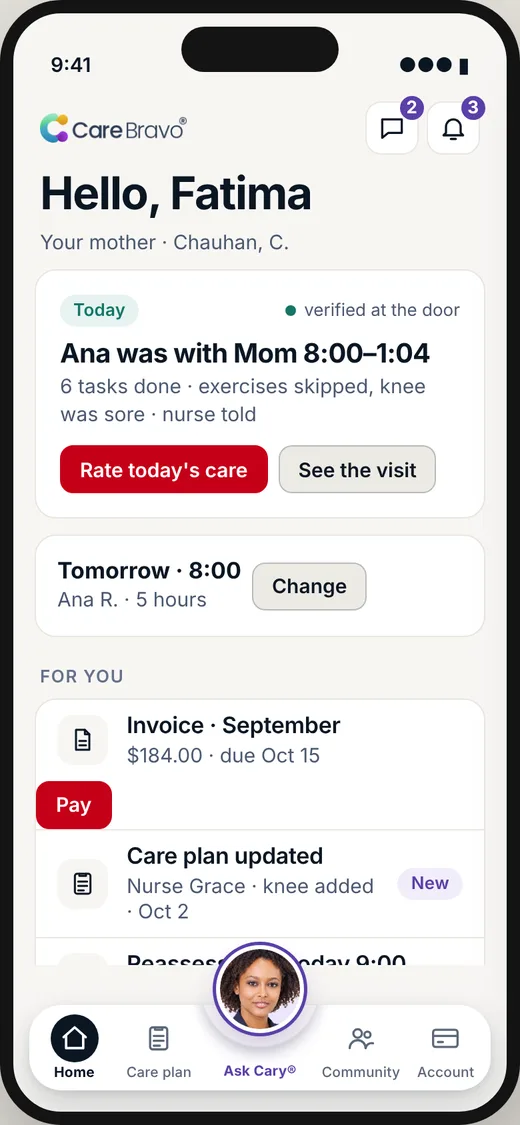
Real product screen. Sample agency, sample data, not a claim.
Family
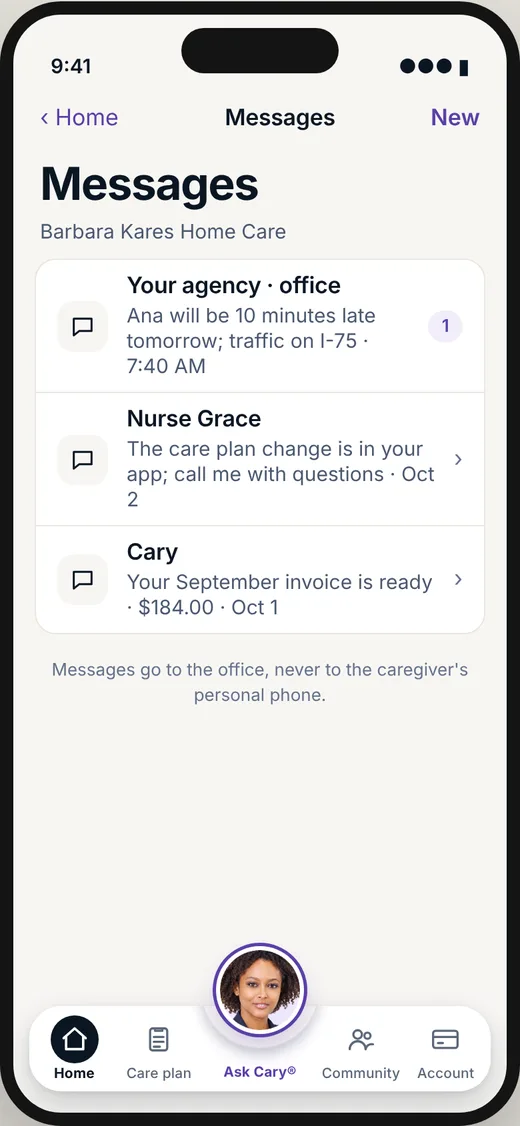
Family
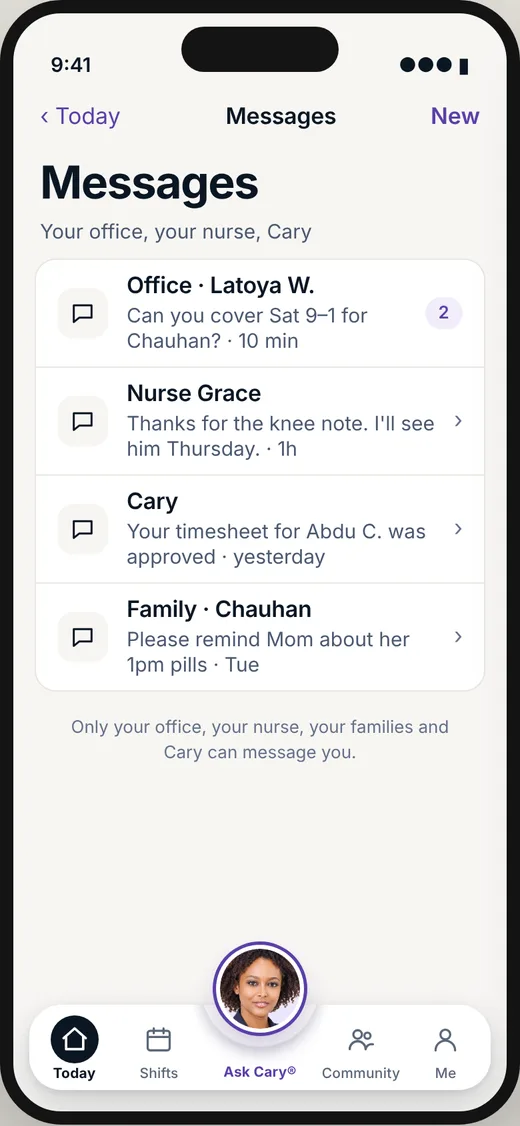
Caregiver
Real product screens. Sample agency, sample data.

On the office screen: Messages from caregivers, families and case managers in one inbox, with Cary drafting the reply.
Why your current app can’t
Families call because nobody told them. Is she coming? Did she come? The office answers the phone instead of running the schedule. Case managers call for the same reason, and the nurse finds out about a fall from a text the next day.
What the Communication agent makes from the tap
The tap tells the family, in one plain sentence, that the caregiver arrived. The voice note tells the nurse what changed, within minutes. The Communication agent drafts the message to the family, the caregiver and the case manager. A person confirms anything that changes care. The daughter never has to call.
CareBravo is the Autonomous Care OS®: an operating system for Medicaid home and community based care, with an AI agent built into each of nine jobs. It starts as the EVV your state approved. Then it does the office work from the caregiver’s one tap at the door. How the whole thing works
An owner’s exact words, answered on the screen, three ways to have it done.
Family asks
The family app shows who is coming, when, and that she is on her way, verified at the door in one plain sentence.
A family that never had to call.Cary drafts the update and the translation; broadcasts wait for your confirm. A family hears about a change only after cover accepts.
Told once, in their language.Owner asks
Cancel the shifts once. The office drafts the form for the case manager from the admission date.
One cancel, one form.Cary drafts the form (the EDWP form, for CCSP and SOURCE) with the admission filled, tells the caregiver now, tells the family the time only, and returns the hours to the authorization. You review and send.
Four people told, one form sent, one tap.Yes. Several home care systems now use AI for family and caregiver communication, mostly in scheduling and billing, and in most of them the AI suggests while your office does the work. In CareBravo, the Communication agent does the work inside rules you write once: The tap tells the family, in one plain sentence, that the caregiver arrived. It is one of nine agents, one for every job in the office, coordinated by Cary. A person confirms anything that moves money or changes care. CareBravo’s AI runs inside our HIPAA safeguards. Your clients’ records are not sent to public frontier AI models.
No. A family sees one plain sentence per visit, who came, what changed in the plan and their share after Medicaid. Not the supervisory note, not swap reasons.
Her own members only: authorization used against approved, plan currency and verified shifts. She can read and request. She cannot change a schedule, and every view is logged.
Anything that changes money or care waits for you. A broadcast is drafted, not sent, until you confirm.
Pick one way to update each family and tell them at intake. Send one short note after each visit. Call right away when something changes, like a late caregiver, a missed visit or a fall. Ask the client who may get updates, and write the answer down. Read the full answer
Check first, then call back fast. Look at whether the caregiver has checked in, call the caregiver, and then tell the family the real time and the plan. If the caregiver cannot make it, say who is coming instead and when. Do not guess or make promises you cannot keep. Read the full answer
Call your backup list first, starting with caregivers who already know the client. Offer the shift to nearby staff, then tell the family the new plan before they ask. Keep a short on-call list and write down the order you call in, so a call-out does not start from scratch each time. Read the full answer
In Georgia, a licensed private home care agency needs a written complaint process. Give each client a written notice of rights, name who handles complaints, give a direct phone number and the state licensing contact, and resolve complaints in a timely way without retaliation. Read the full answer
HIPAA does not ban texting, but it requires reasonable safeguards. Keep texts short, leave out names, diagnoses and full addresses where you can, use locked phones, and write a texting policy. Train staff on it. Ask your lawyer or compliance advisor to confirm your setup. Read the full answer
You take the bravo. We take the work.
The Calculator maps your drain across all nine jobs, shows which to hand over first, and recommends one plan. It never sells you up.
We email you the highlights the moment you ask. No call. Nobody calls unless you ask.